
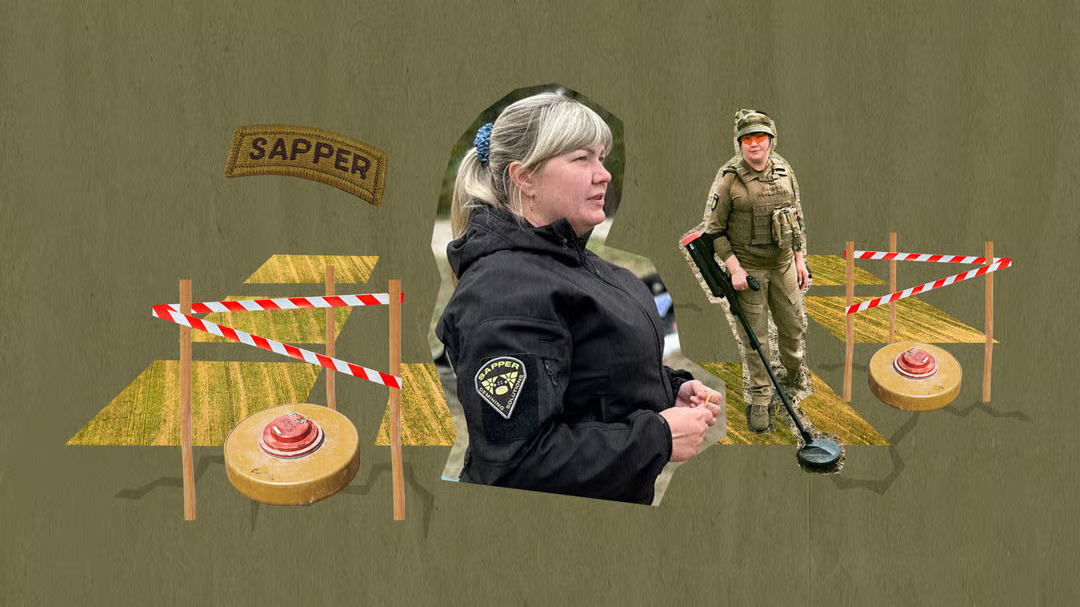
She had to swap heels and a classic suit for a bulletproof vest and helmet. Instead of office papers, she picked up a metal detector; instead of familiar accounting reports, she chose minefields.
How do women master the profession of a deminer, and what do they face during training and work? SHOTAM tells the story of deminer Tetiana Shukhnarenko.
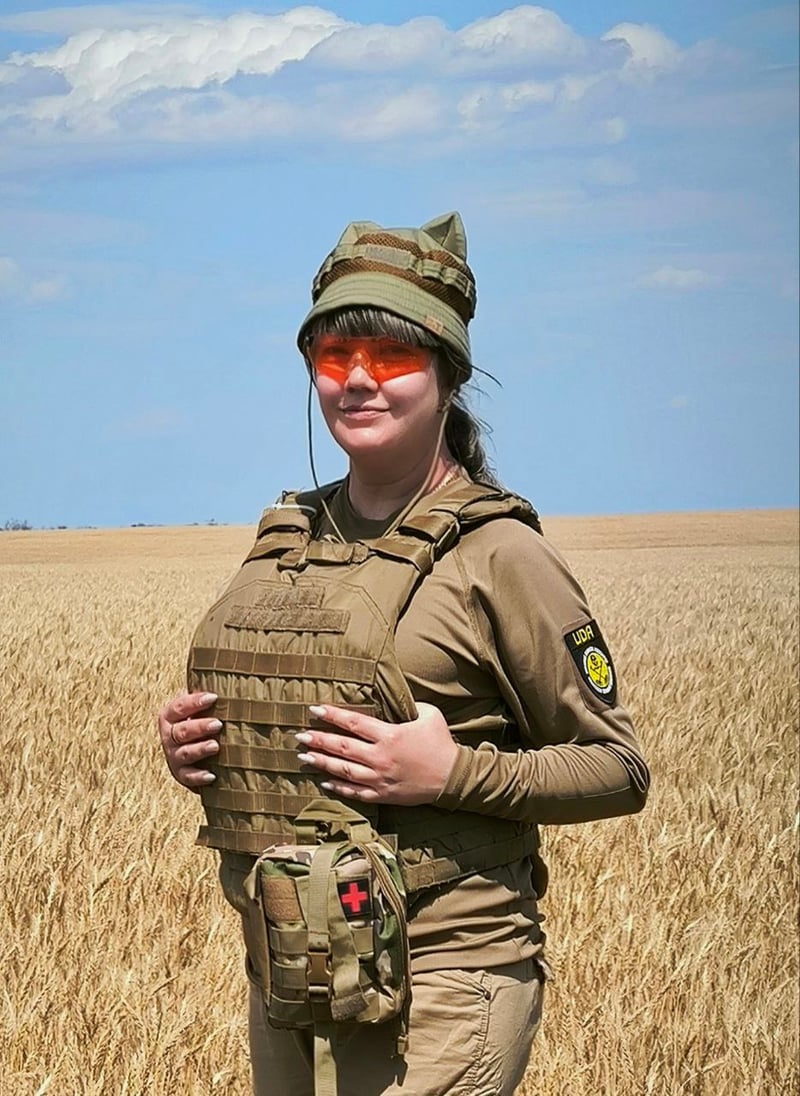
Tetiana Shukhnarenko
Quality Control Engineer for Humanitarian Demining at the NGO “Ukrainian Deminers Association”
The ATO Changed My Profession
I graduated from Kharkiv National University of Economics with a degree in Banking. I worked in a bank for more than five years: I started as a consumer lending manager, later passed more than ten exams and became a bank accountant-controller. At the same time, I helped run my father’s business — he was a blacksmith.
I never dreamed of building a banking career, but that job gave me stability — stability that began to collapse when the war came to my home.
We lived in the frontline city of Bakhmut. One day there was heavy shelling, and a Russian Grad MLRS rocket landed almost at the doorstep of my mother-in-law’s house. My one-and-a-half-year-old daughter was there at that moment. The blast wave threw them about one and a half meters — my mother-in-law literally saved the child from shrapnel with her own body.
When I rushed there and saw my daughter alive, I realized that after something like that I could no longer live the way I had before. That was when the thought first appeared that I had to protect my home and do everything I could for Ukraine to win.
At the same time, another tragedy came to our family. My father became seriously ill with cancer. All the money went toward treatment; we sold everything that could be sold. I desperately wanted my father to have a chance to recover, so I started looking for a job where I could earn more.
I Accidentally Attended a Demining Presentation — and Went to Training
Once, a British humanitarian demining organization, The HALO Trust, came to our city. I accidentally attended their presentation, where they were looking for deminers to join their team. There were no gender restrictions — it turned out that women could also clear landmines. I decided that demining was the best thing I could do under the circumstances I was living in at the time.
The basic deminer training course lasted one and a half months. It consisted of theory and practical field tasks. A few months later, I also completed sapper-paramedic courses.
There were almost no girls among us — only two among about 60 men. When it came to exams, even half of the men dropped out of training. Those who passed immediately went to work in Donetsk and Luhansk regions.
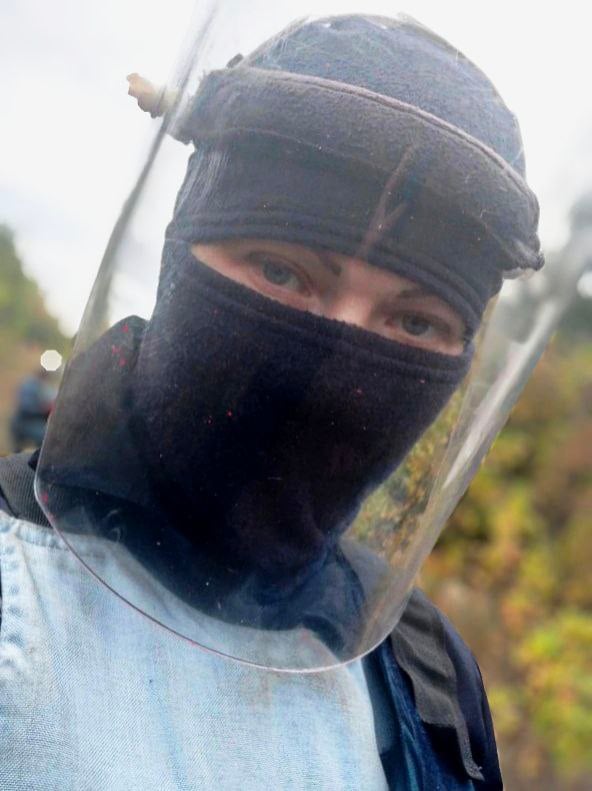
It was during these courses that I met my husband. He was a machine operator. At first, we did not even cross paths, but later we ended up in the same mechanized demining group. That is how the war suddenly brought us together — and later took him away. A year ago, Max was killed.
Yesterday It Was Computer Work — Today It Is Training Grounds
I remember the times when we worked in the buffer zone: heavy aprons, bulletproof vests on top, and not a single woman nearby. Then the first women began to appear. I remember one girl sitting in tears and asking: “God, what did I do wrong for you to punish me like this?”
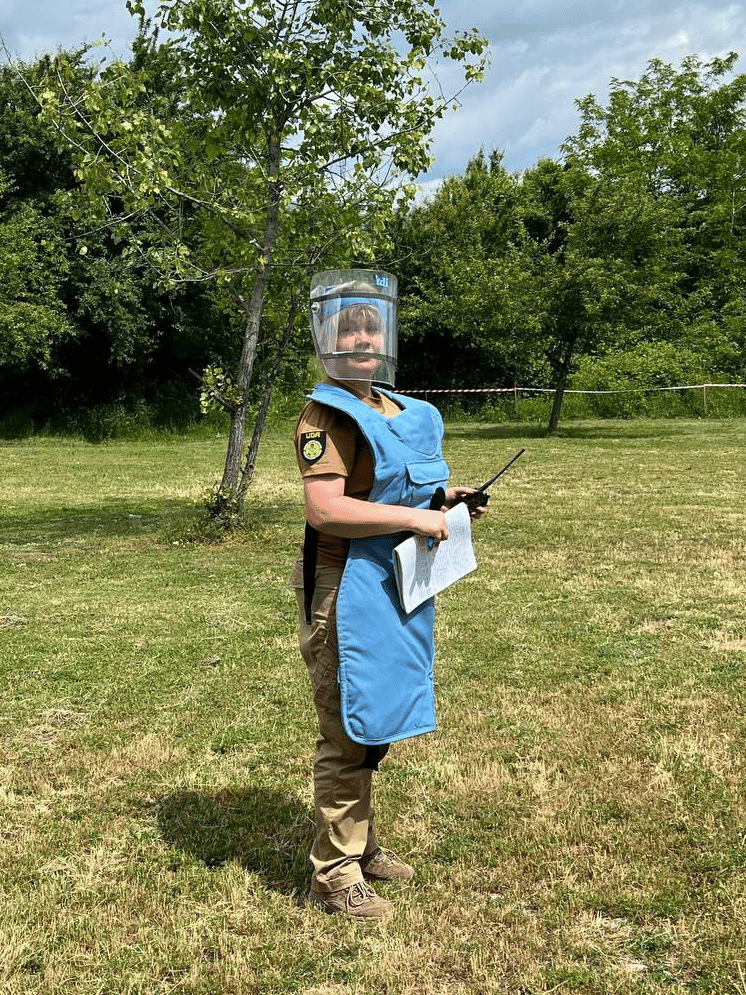
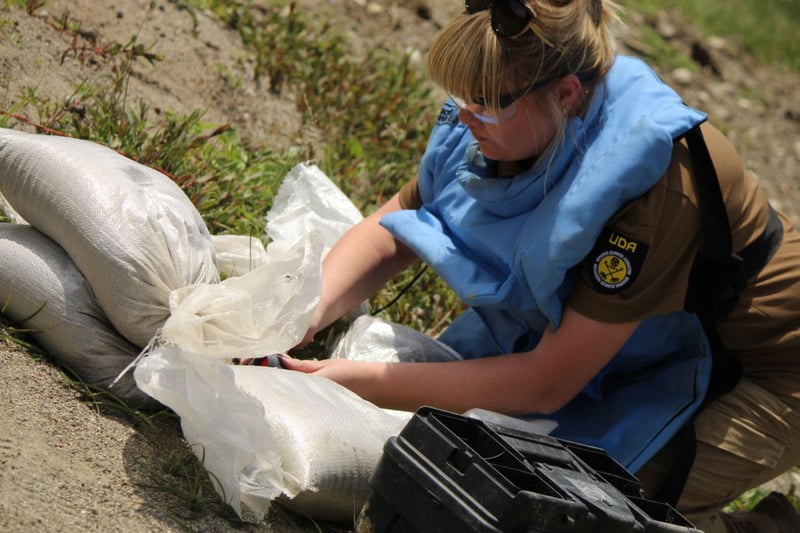
At first, it was difficult for me too: training grounds, minefields, combat areas. Sometimes you kneel, checking every centimeter, or walk for hours with a wide-frame detector, or search for tripwires two floors high in a forest strip. But now I am fine with it — maybe I have simply gotten used to it.
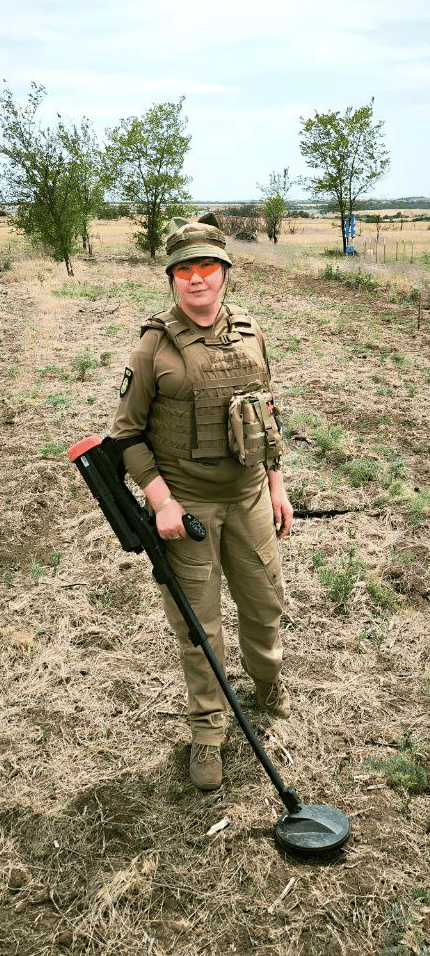
The most dangerous places for me are minefields and forest strips. There is always a threat of tripwires there. This is work measured literally in centimeters. Very slowly, very carefully, with checks at several levels. Because a mine may not go off near you, but near your colleague — and you have to remember that every second.
Before entering a hazardous area, we begin by surveying the site. We collect information from local residents and prepare a report. Based on that report, the area receives a status — either suspected hazardous or confirmed hazardous.
Then this report is analyzed and submitted to the Mine Action Center. It is there that the decision is made and the demining plan for a specific site is approved. Only after that do we receive an official order and can begin clearance.
I Set a Goal to Become a Demining Team Leader
In 2018, my salary at the demining organization became twice as high as it had been at the bank — about 12,000 hryvnias. In addition to financial benefits, I developed the ambition to become a demining team leader. Within six months, thanks to strong recommendations from my field commanders and good clearance performance, my dream came true.
If The HALO Trust gave me the foundation, then the Ukrainian Deminers Association gave me wings. At the beginning of the full-scale invasion in 2022, my family and I left Bakhmut for Kyiv. At that time, I was invited to join the Association and became Head of the Department of Non-Technical Survey and Risk Education.
In 2024, I received a state-issued certificate confirming the full professional qualification of a deminer. Last year, I became a quality control engineer.
In the Field, We Are Like a Family
Today I work more with documents, but whenever I have the opportunity, I always choose field work. I feel more comfortable where I can feel the ground under my feet. After almost eight years in this field, I have become used to these conditions.
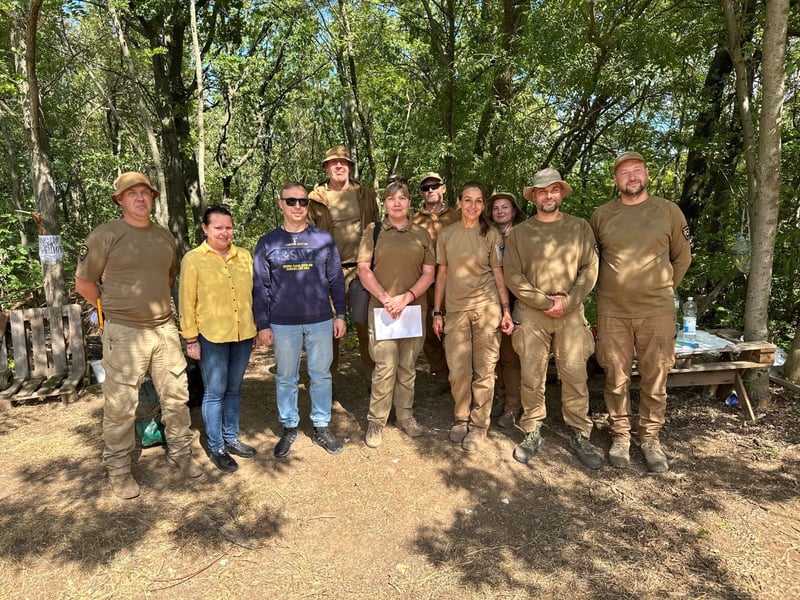
In the field, we are like a family. When you spend 25 days a month beside the same people, you begin to understand them without words: by a look, by a movement, by silence. You know who is having a hard time, and who can support you.
I go out with teams to monitor the implementation of demining processes in accordance with standard operating procedures and national standards. My demining devices are a detector, a drone, GPS, and maps with demining plans. I document all processes: from the first survey stages to the final completion report.
Do Not Respect Me as a Woman — Respect Me as a Deminer
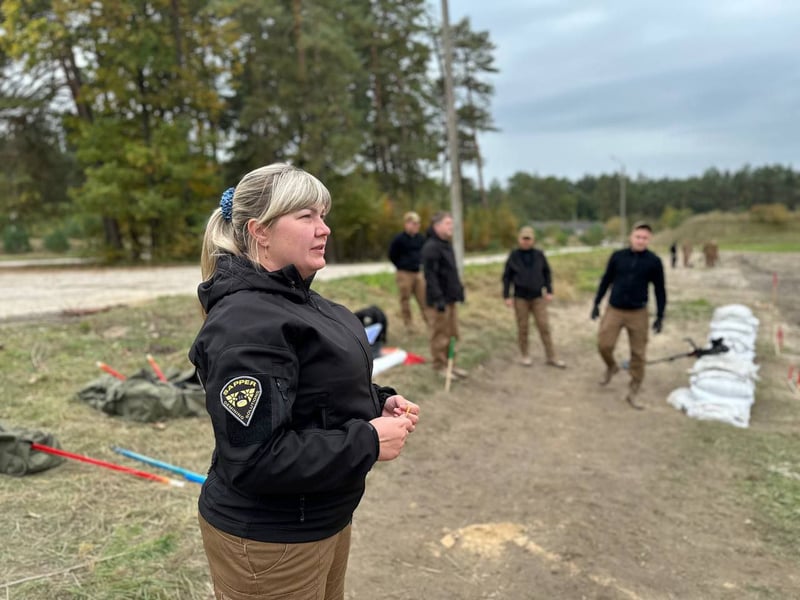
In our work, it does not matter who you are — a man or a woman, what position you hold, or how old you are. Only one thing matters here: experience.
I know for sure: respect is not requested — it is earned. And I do not need to be respected as a woman — respect me as a deminer. At the same time, I can be both a deminer and a woman who goes to the hairdresser and wants to look beautiful. These things do not contradict each other.
I consider myself a fairly experienced person, although in this field there is no limit to perfection — there is always room to grow. I always want the best result: I can sit in the evenings, study, and prepare. Not to be better than someone else, but because I truly care about it.
Today, we are preparing for certification in mechanized demining. This is an opportunity to make the work safer and, at the same time, more effective. I have experience in this area and want to restore it at a new level — working with machines.
I Dream of Demining My Native Bakhmut
Yes, Bakhmut no longer exists, but I still dream of it. I dream of demining my hometown. I really want my children to return home one day. Because my youngest already says: “Mom, I don’t remember what my room looks like.”
And that is probably the scariest thing for me. That memory fades. That I did not take any photographs from home. Not mine, not my eldest daughter’s, not childhood photos. All I have are a few digital files that happened to survive. We left home thinking it would only be for a month, just to wait things out.
I believe that humanitarian demining is now one of the important fields where a woman can be useful to the country if she cannot or is not ready to join the Armed Forces. This is work that will be needed for many more years.