

Tymur Pistriuha, chairman of the board of the UDA, commented to Ukrainska Pravda on the development of demining technologies.
The area of potentially dangerous territories in Ukraine today is about 137,000 square kilometers. This is more than the entire area of Greece. Ukraine is the most mined country in the world, and the scale of this danger directly affects the restoration of the state. The return of people, the launch of infrastructure, and the restoration of the agricultural sector will not begin until experts confirm that the territory is safe.
In this context, there is a widespread belief that demining can eventually be done by robots. Technologies are developing rapidly, and the risks for deminers remain high, so the idea of full automation sounds appealing. But in practice, it is more complicated, and I will explain why this statement is a myth and why people remain the main element of humanitarian demining.
The myth that robots and technology will replace deminers
This myth arises from sensational headlines and the desire of certain companies to draw attention to their developments. However, it oversimplifies reality.
Humanitarian demining is a complex system in which decisions are made by people: deminers, non-technical survey specialists, and team leaders. Technology does help and reduces risks, but it does not take responsibility for the final result.
Non-technical survey is the first and one of the most important stages. This is where the extent of contamination is determined and a further plan of action is formulated. The most valuable part of this process is working with informants, i.e., local residents who have witnessed the fighting and can provide information that cannot be recorded by drones or cameras. No algorithm can replace these testimonies.
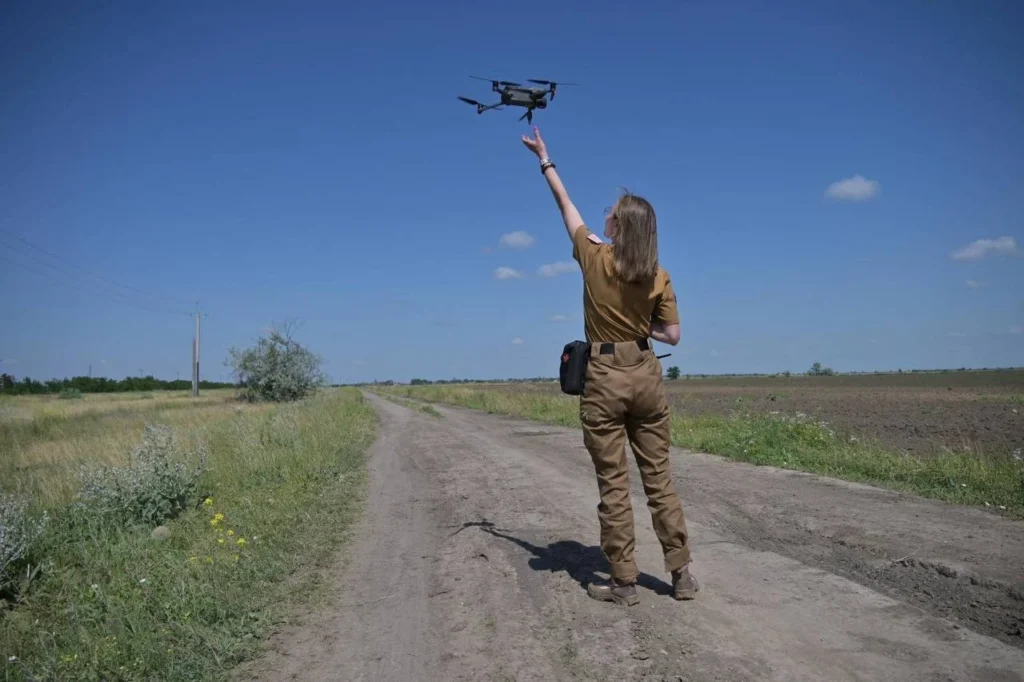
After that, the area is surveyed using drones, which record craters, debris, and other traces of combat operations. Artificial intelligence systems help identify potentially dangerous objects. However, analysis and conclusions remain the responsibility of specialists.
Humans also play a key role in other stages. Robotic systems take on mechanized demining. They cover large areas, clearing the surface of mines or bringing explosive objects to the surface. But after they have passed, sappers must check the area manually with metal detectors, as the equipment may miss individual objects or be unable to cope with difficult terrain.
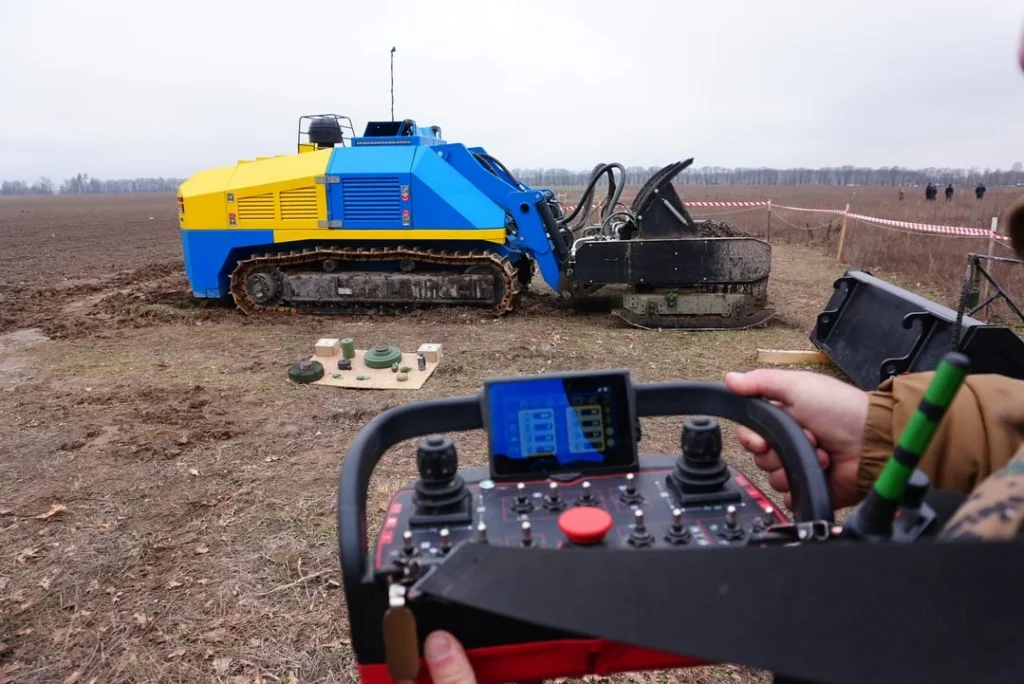
There are areas where machines cannot operate at all. For example, dense forests or ravines. Of course, no one is going to cut down a forest just to bring in equipment, so these areas are cleared manually.
Therefore, technology makes the work of deminers faster and safer, but the final decisions and responsibility remain with humans.
The future of Ukraine in mine action
When it comes to how Ukraine’s mine action will develop over the next 5-10 years, we are currently transitioning from a country that is learning from others to a country that others look to for guidance. This is evident at international conferences and in requests from partners who are studying our approaches and practices.
At the same time, a strong professional community is forming. In the context of full-scale war, Ukrainian specialists have gained unique practical experience that cannot be replicated in training centers. This applies to sappers, drone operators, engineers, analysts, and program managers. Thanks to this, Ukraine is effectively becoming a breeding ground for personnel capable of working within the country and assisting states facing similar challenges.
Technological development is also changing the procedures themselves. What was not provided for in regulatory documents until recently is now part of normal practice. This includes the use of drones, mechanized demining, and the application of artificial intelligence. All of this is gradually being enshrined in documents and becoming part of systematic work.
Thus, Ukraine is moving in a direction where it is both a center of expertise and a testing ground for the implementation of new technologies.
Conclusion
To answer the popular question of when Ukraine will be cleared of mines, according to the National Mine Action Strategy developed with the participation of the Ukrainian Deminers Association, the state plans to clear 80 percent of dangerous areas of mines by 2033. I am convinced that this is possible with adequate funding and support from partners.
But the future of mine action in Ukraine lies in a combination of technologies and strong expertise. Technology will expand the capabilities of specialists, but key decisions and responsibility will remain with people. The speed at which Ukrainian territories are cleared will depend on how effectively we combine these two components.
Follow the most relevant events on our Facebook page
Read the latest news of the Association in the section Latest events